How to use water pumps
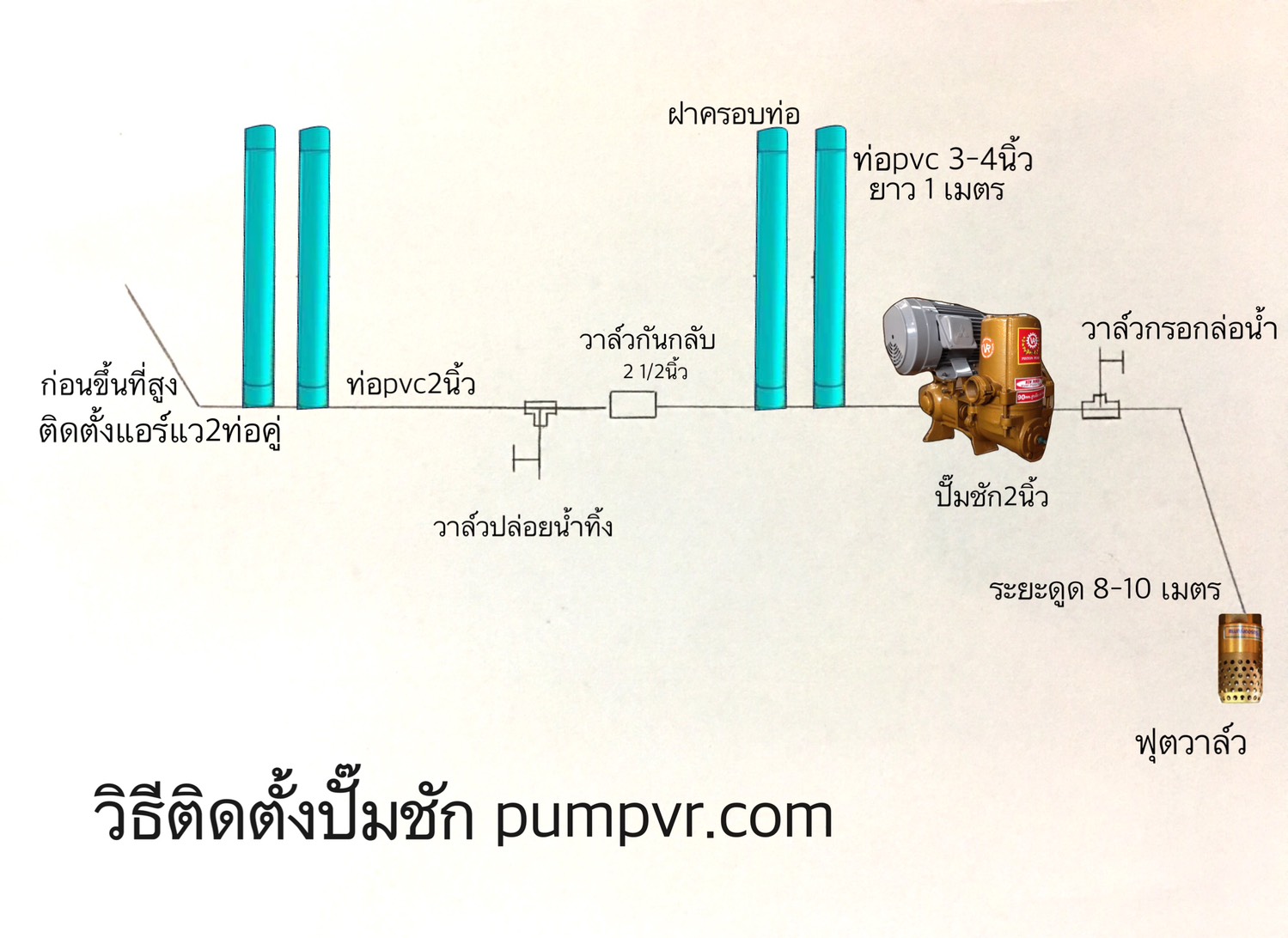
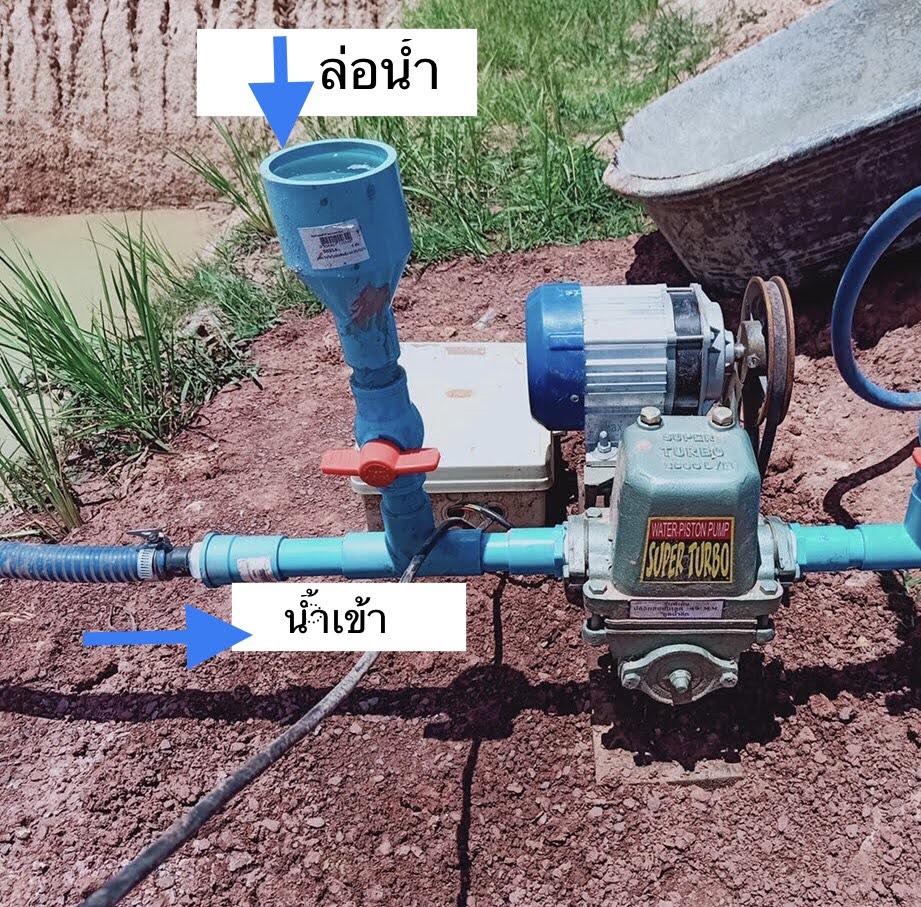
How to Install Suction and Discharge Pipes
1. Install the suction pipe properly — ensure there are no leaks.
Leaks at pipe joints during operation can be fixed by wrapping with bicycle inner tube rubber. This method works very well.
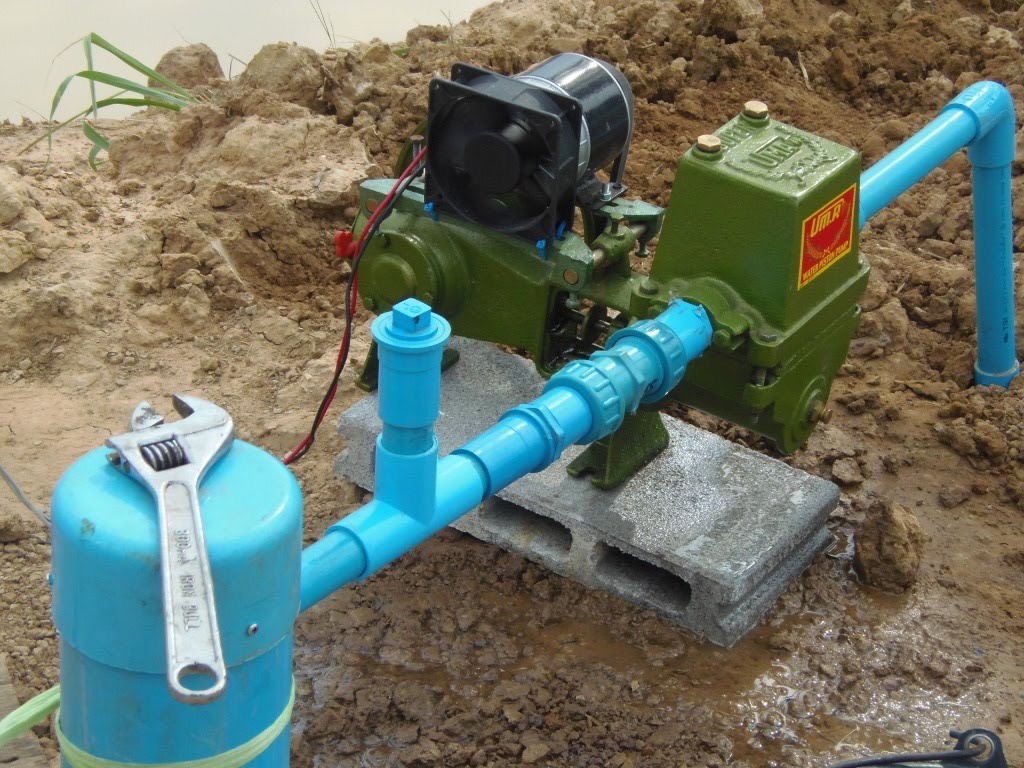
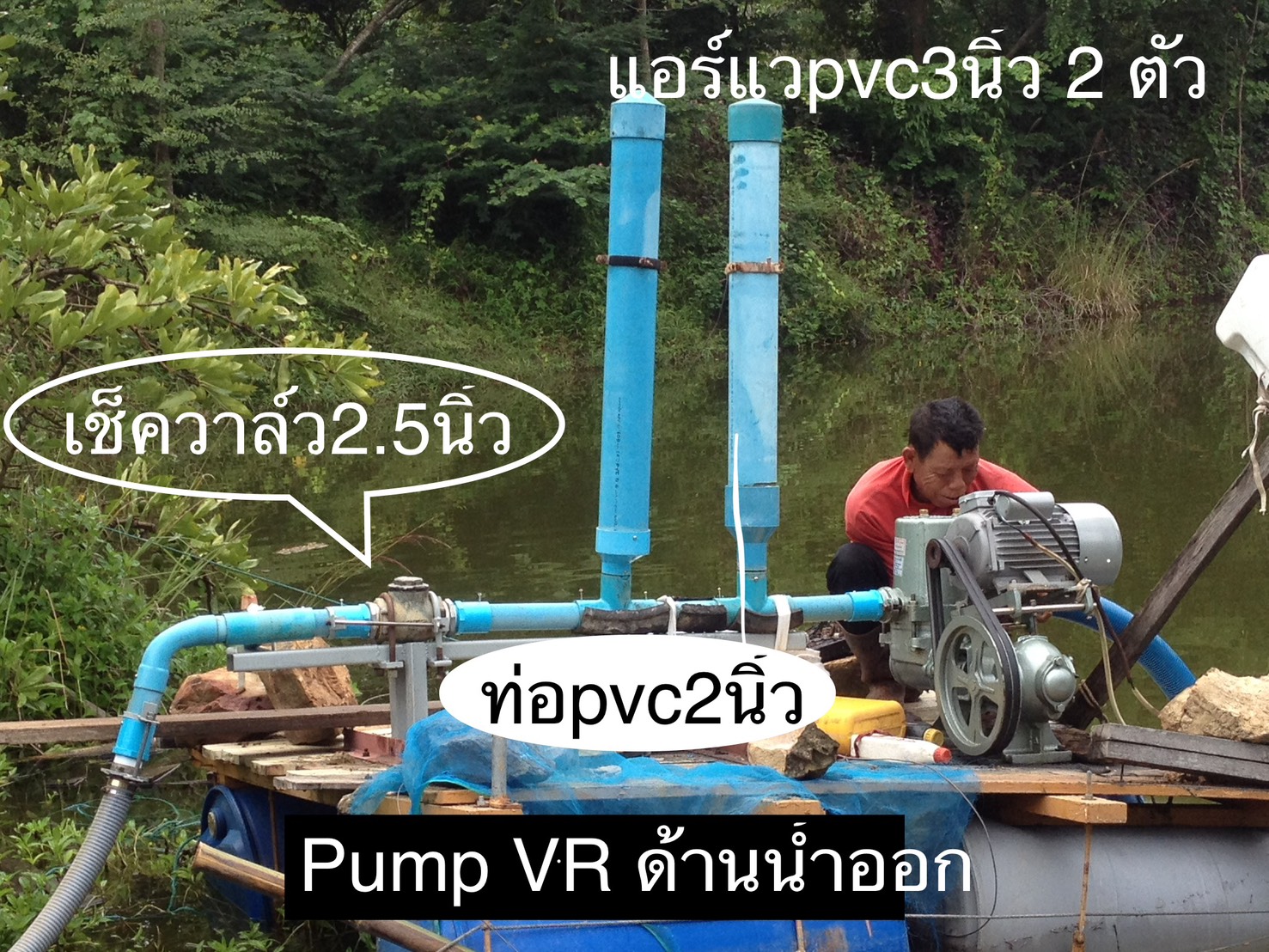
2. Install an Air Chamber on the discharge pipe from the pump.
Its function is to use the air inside the pipe to absorb pressure caused by changes in kinetic energy of water, or changes in flow velocity in the pipe, converting it into potential energy or pipe pressure, known as Water Hammer. The severity of this pressure increase depends on how quickly the water flow is shut off.
Installing an Air Chamber and Check Valves helps absorb the impact from water hammer, reduces friction and air resistance, allows air to escape from the water flow path, making the pump work more efficiently — less strain on the pump, lower motor current draw, and smoother water output.
It also protects internal pump components from damage.
For long-distance water delivery, air release pipes should be installed at intervals to manage air bubbles in the pipe.
3. Long-distance water delivery and Air Release Valve installation.
When delivering water over long distances and to higher elevations, air accumulates in the pipe from pumping or the centrifugal action of the water pump. This creates a load from trapped air in the pipe, which flows and collects at the highest points in each section of the pipe or at upward bends. If the air is not released, water will not flow at full pipe capacity, even under pressurized flow, resulting in pressure loss because the water must flow through narrow spaces instead of filling the entire pipe. If the pipe is very long with sufficiently high upward bends, the pressure created by water compressing air in the closed system may cause the water to stop flowing entirely, as if the pipe were blocked.
Installing Air Release Valves helps expel air that blocks the water path, allowing water to flow at full pipe capacity. Air Release Valves are relatively expensive and are suitable for water pipes where flow starts and stops, requiring regular air release. A simple Ball Valve can serve as an easy air release valve by installing them at intervals and opening/closing them sequentially when starting the water delivery, which will result in full pipe flow.
4. Drain the water remaining in the discharge pipe before using the pump.
When delivering water to high and distant locations, the weight of water remaining in the pipe is substantial and creates a load when starting the water pump. Therefore, all water remaining in the discharge pipe must be drained before using the water pump.
Piston Pump with DC Motor: Pulley Ratio Calculation Formula
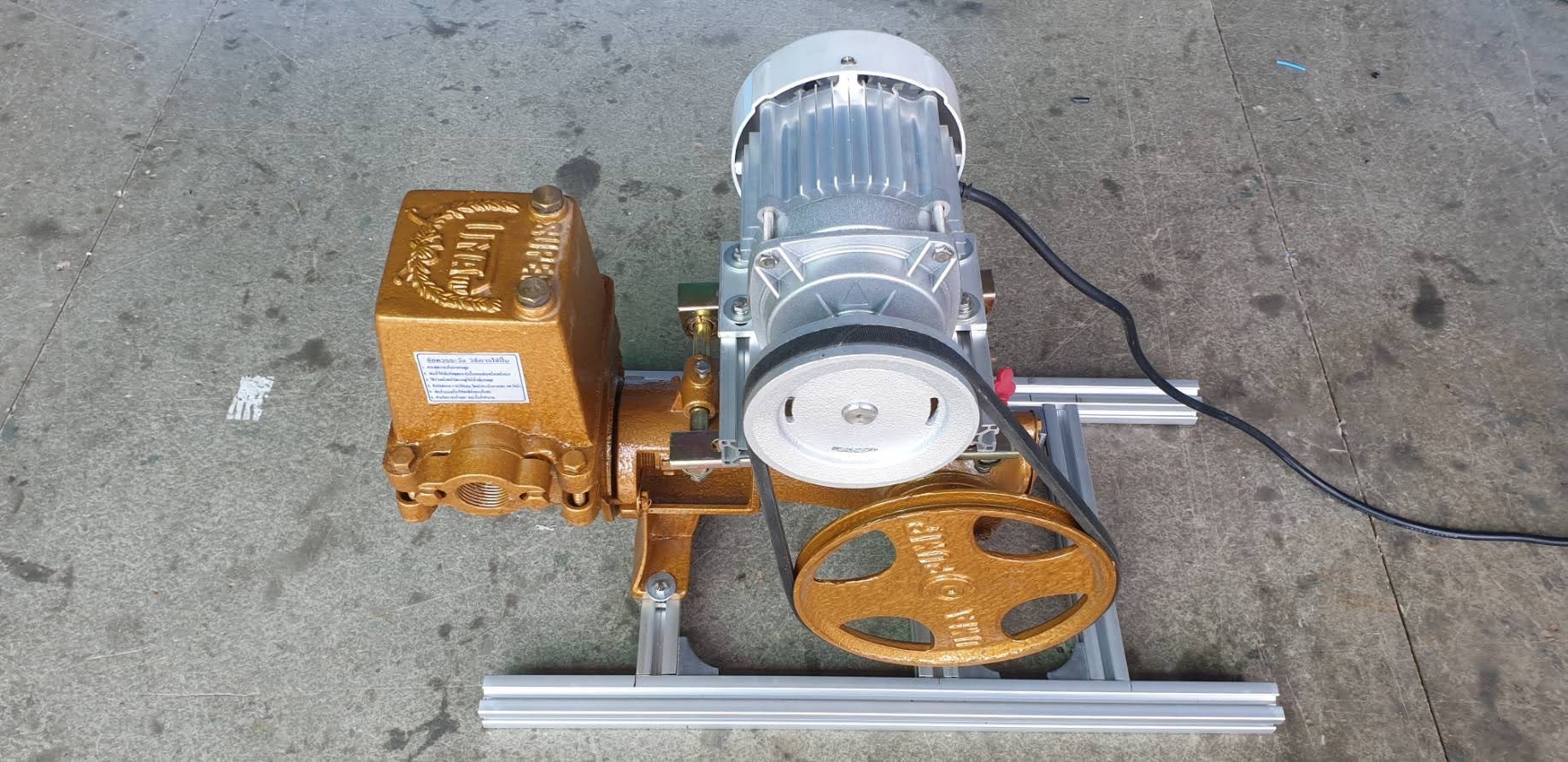
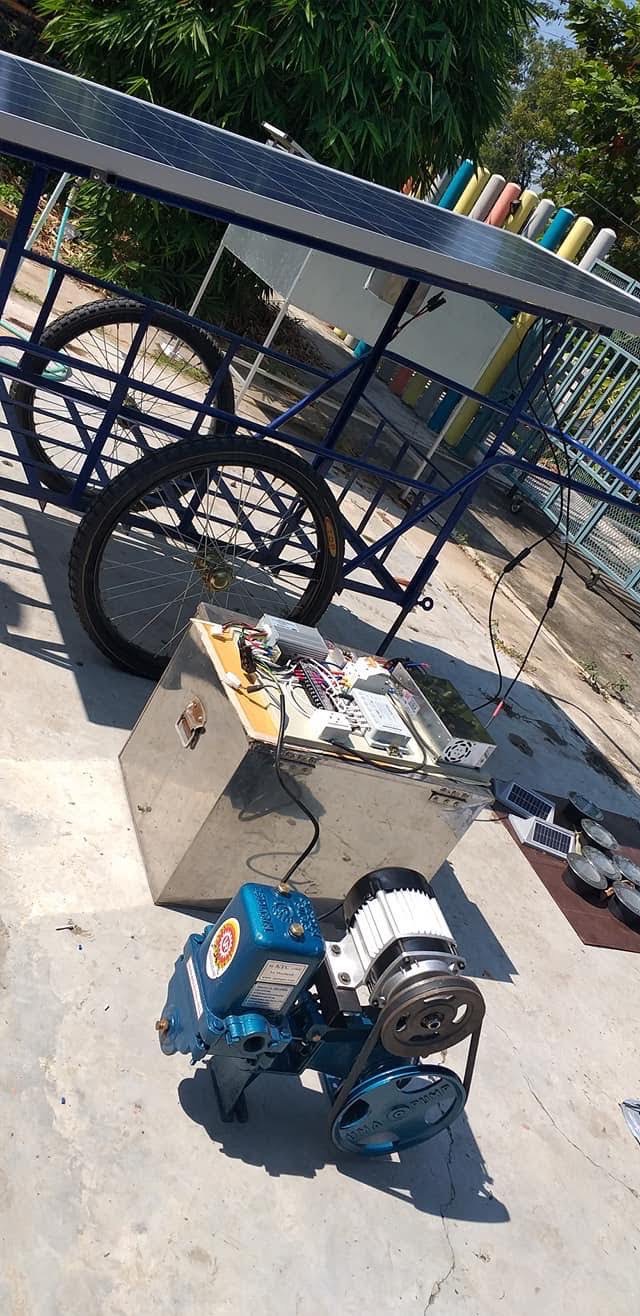
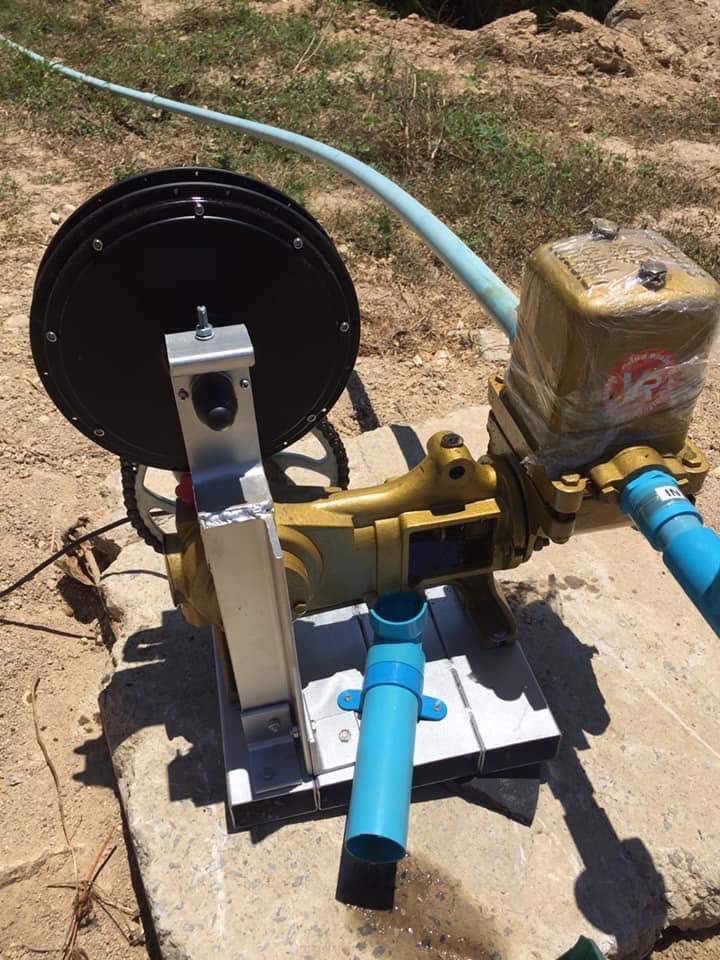
UMA Ruang Khao piston pump, model R43S, piston diameter 43 mm.
Water output: 1,500 – 1,800 liters/hour
Suction depth: 8–10 meters
Discharge height: 25–30 meters
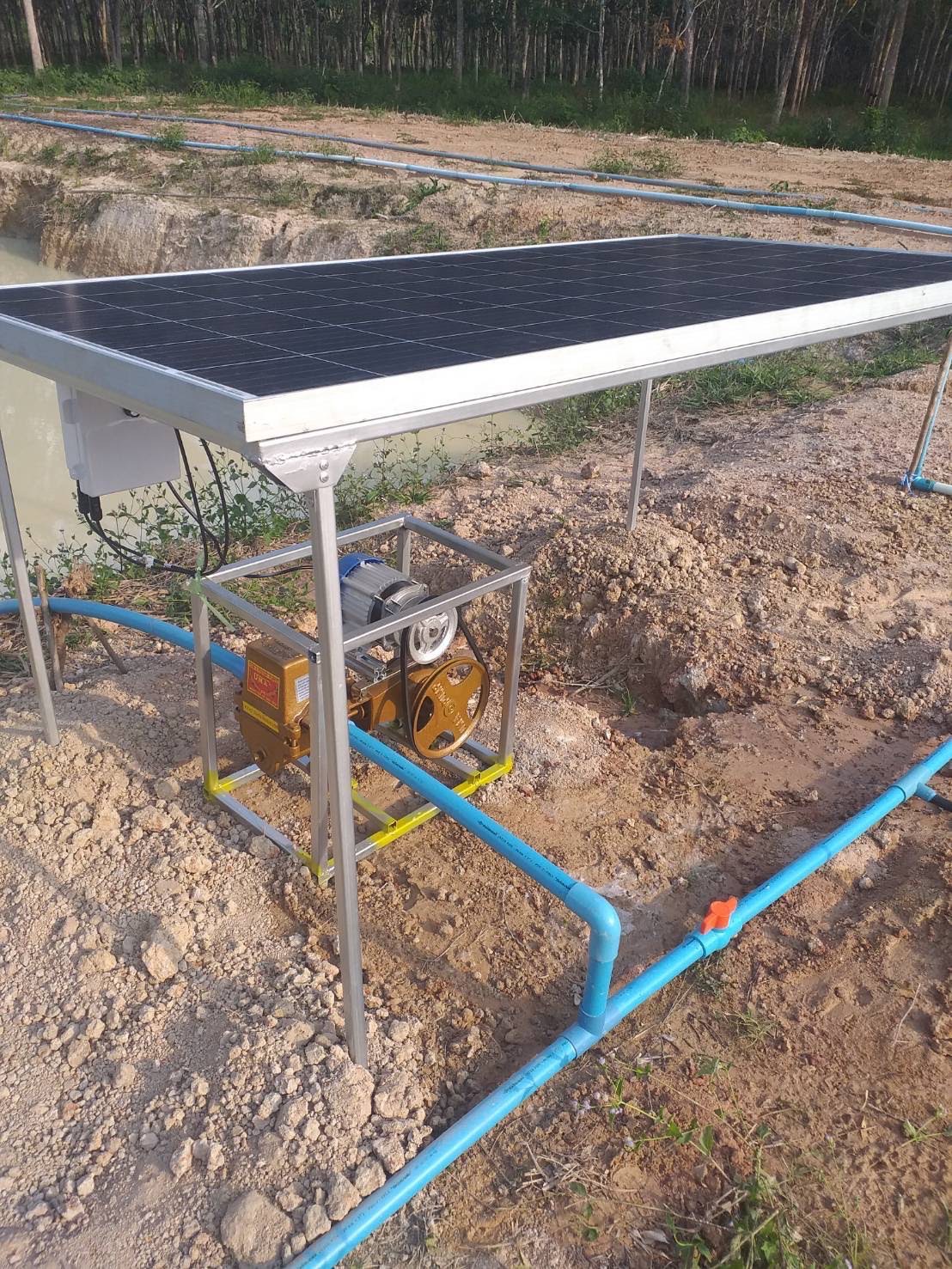
Delivery distance over 500 meters. Installed with a 350-watt DC motor, operating by direct connection to a 250–325 watt solar panel (1 panel). When sunlight is available, the pump will start operating. Storing power from the panel into a Deep Cycle battery enables continuous operation. The operating speed should be set appropriately.
Piston pumps work best at 300 RPM — the water output is smooth and the valve does not work too hard.
Formula for calculating piston pump operating speed:
Example:
UMA Ruang Khao piston pump, 1-inch size, installed with a single-phase motor at 1,450 RPM (read from the motor nameplate). Pump pulley diameter: 8.5 inches. Motor pulley diameter: 2 inches.
Calculation method:
Motor speed = 1,450 RPM
Motor pulley diameter = 2 inches
Pump pulley diameter = 8.5 inches
Pump operating speed = (1,450 × 2) / 8.5
= 341 RPM
Therefore, the 1-inch UMA Ruang Khao piston pump operates at 341 RPM.
Problem: You have a 500 RPM DC motor and want to use it with a 1-inch UMA Ruang Khao piston pump. Calculate the motor pulley size to achieve a suitable pump speed.
Pump operating speed calculation formula:
Motor pulley diameter = (300 RPM × 8.5) / 500
= 5.1 inches
Therefore, a motor pulley with a 5-inch diameter is needed.